 Event Starts in:
Hurry Up!




On Demand
Welcome to the Video on Demand Page for DigiMarCon Great Plains 2025.
Below are the video and slide decks for all the General Session keynote presentations on Wednesday, May 19th, 2016 at DoubleTree by Hilton Kansas City Overland Park Hotel, Great Plains, Canada.
General Sessions (On Demand)
Wednesday, May 19th, 2016
CANADA-2016-01
Social Selling: How to Find, Engage, and Influence Key Decision Makers
Andrew Jenkins
Principal


Overview
Key Takeaways
View the Video
View Slides
Overview
Being knowledgeable about social media is no longer optional. Whether you want to build your personal brand, grow your business, or expand your professional networks, you need to find, engage, and influence key decision makers. This session will help you understand the resources available through LinkedIn, Twitter and beyond, and the best strategies to curate content that conveys your thought leadership, expertise and interests. Whether you are new to this realm, or consider yourself a digital native, this session will provide you with new techniques for raising your social media clout.
Key Takeaways
The preface of Andrew’s speech is about social selling in which, it is not who you know, but how much you know them matter. More importantly, social selling is not just about selling a product or service, but it can be about how to further your own professional career in any field. And this approach does not suggest people and companies to abandon other efforts, but rather to add another tool into their toolbox. Andrew’s talk then focuses mostly on how to employ personal LinkedIn profile and LinkedIn tools most effectively. His own personal story serves as example of how LinkedIn connection developed consciously and organically can lead to a lifelong career opportunity.
Optimizing your LinkedIn profile can bring great return as it is probably the first place one would be looked at in a professional context. However, before a connection network can be developed and utilized, one needs to do their best to have his or her own LinkedIn page stands out. Make sure you understand what impression you want to make with your whole profile. A bad profile is just like making a bad impression. And it is not difficult to have a professional looking profile. For example, adding a professional picture means 11 times more likely that your profile will be viewed. LinkedIn even has a tool to show you how to take a proper picture. Avoid oddities in your picture such as background or remnants of other people. Andrew goes on to discuss a number of aspects to consider in completing an effective LinkedIn profile.
- Humanize your “Summary”: here is the opportunity to say something meaningful about you. It is the richest business card that you can have. Don’t sound too vague, too technical, don’t talk about yourself in 3rd person, and avoid jargons and buzzwords. Words such as leadership, motivated, creative, strategic, extensive experiences, passionate… tend to be overused and are losing their magic. A few other tips for summary writing are: write more than 40 words, talk about accomplishments over responsibilities, focus on how your skills can help other people and businesses, and sprinkle keywords carefully without overloading the readers.
- Skills and endorsements: It is tremendously important to have this section filled. Profiles that have skills are 13 times more chances to get viewed. And it is perfectly reasonable to ask others to endorse your skills when appropriate.
- Location: List where you want to be found professionally, not necessarily your physical location. That will increase your professional opportunities where you would want to be.
- Build your brand: LinkedIn allows everyone the same opportunity to publish. So write and write consistently. Think about LinkedIn as a place for you to showcase your professional knowledge, not just another social network.
- LinkedIn also has many other tools. It allows you to embed your blog, tweeter feed, portfolio information in your profile. Make sure you customize your LinkedIn profile link to be memorable, which can be embedded in your email signature. You can also look at different statistics to understand what is driving traffic to your profile or find out where your profile rank. Andrew suggests you to pay attention to people who view your profile and not to hesitate to reach out to them. Mutual connections are also a great resource to expand your own network.
- Social Selling Index on LinkedIn are based on 4 main areas briefly described as: your professional brand, your relationships, your contact shares and your use of LinkedIn to find prospects. The score can fluctuate and it is recommended that you would keep an eye on yours.
In short, people “buy” from people they know, like and trust. Thus it is a good practice to drill down on someone’s profile and build a good rapport with him / her. Andrew also suggests that companies, without spending large resources, can derive more value from LinkedIn through their employees’ individual profiles and leverage their individual relationships. Andrew has published a large number of articles on the topic of LinkedIn profile and social selling on LinkedIn.
View the Video
View Slides
CANADA-2016-02
B2B Digital Marketing: A Journey That Doesn’t Stop Growing
Mohammed Daouk
Digital Marketing Supervisor


Overview
Key Takeaways
View the Video
View Slides
Overview
Creating a winning user experience leveraging digital tools in the B2B Safety & Industrial world. Finding today’s customers, igniting curiosity and encouraging a repeat visit. Digital and communications is continuously changing and what happened on the internet yesterday is a year old today.
Key Takeaways
Mohammed works at 3M company, in the Personal Safety Product Department. Examples of their products are respirator, head protection and eye protection gears. Products are sold to distributors, who further sell the purchasers of companies that actually use the products. In this speech, Mohammed discusses some of his digital marketing effort at 3M in the context of B2B, specifically in 4 areas:
1. Target Audience: the audience as a whole has become smarter, they know more about your products and competitive products, and they want services / answers in real time. In the case of Mohamed departments, there are three groups of audience: purchasers, distributors, and salesperson with their own requirements. How would 3M reconcile these seemingly different concerns and meet the needs of all without sending out conflicting messages ore spending extensive resources?
2. Relevance and Sweet Spot: this is the answer to the question posted above. It appears that each audience group has their own focus. For example, salespeople want the products to sell better, distributors may want quicker interactions and more information to distribute better, while purchasers want to know if the products are right for their business. Yet once 3M communicate with all parties, and dig deeper into the issue, it becomes apparent that all of the groups have the same fundamental concern. All parties involved want to reduce injuries and save lives. It is up to 3M to find the right tools to convey this message to the three audience groups.
3. Digital Tools and Web: There are many different tools available, and the key is to find out what would work for all audience involved. It is possible that each type of audience would prefer different method of communication, ranking form email, to passive website, to interactive app. In the case of B2B, Mohammed suggests that it is manageable to talk to purchasers, distributors, etc. directly to pick up on their similarities, and decide on what tools to deliver digitally.
4. Technologies: 3M is still a traditional and vast organization, where the adoption and requirement of digital technologies vary. Mohammed’s team decides to take a different approach and introduce a new tool approximately 1.5 years ago: a product info app. It has changed the way his department communicated about product safety with their salespeople, distributors and purchases. It has reduced the number of brochures printed, and simplified the product information delivery and selling process.
Mohammed concludes the presentation by suggesting that the key is to ask “what else can we do” in the digital sphere, and not to rely on just the obvious or traditional approach. And that there is nothing wrong with “leaving the desk” to communicate directly with your audience to understand their product / service requirements, as well as their preferred technologies.
View the Video
View Slides
CANADA-2016-03
Driving Conversion on Mobile: A Neuroscience Perspective
Diana Lucaci
CEO & Founder


Overview
Key Takeaways
View the Video
View Slides
Overview
Until now, Marketers have relied heavily on users’ explicit responses and feedback to mobile applications to determine whether their mobile commerce efforts have hit the mark. However, with so many variables, external expectations and preconceived notions weighing on people’s responses, traditional research methods can feel incomplete.
True Impact Marketing and Plastic Mobile conducted a study that applied neuroscience to user experience to explore what users actually saw, thought and felt when following the customer journey in three transaction-based mobile applications. By determining positive and negative emotions and attentional activation – rather than relying on people to say what they mean without any bias, influence, or other variables altering their true reaction – the study finds new insights into engagement. The findings can help marketers, researchers and customer experience designers optimize every precious pixel.
Key Takeaways
Diana’s talk focuses on the use science to understand how people make their decision, which specifically leads to conversion on mobile. She strongly suggests that people are not just a number, and that businesses must put customers at the center of their organizations. The key concept is to humanize the customers, and to understand not only what they think but also how they feel about your products. It is acknowledged that people tend to find it difficult to express their feeling precisely and pinpoint the moments they occur. Yet most behaviours are believed driven by emotions. Thus if companies only have data on facts, such as who and what, they have not understood the human emotions in the purchasing process. Consumer Neuroscience tries to combine both Neuroscience and Biometrics measurements.
1. Neuroscience: tries to answer the question why people feel the emotions. Metrics are measure in areas such as cognitive load, motivation, visual attention, arousal or emotional intensity.
2. Biometrics: is considered uni-dimensional, measuring what physically happens when people go through various emotions. Some of the metrics are: facial expressions, eye tracing, heart rate, skin responses
One of the key research findings is that what people say how they feel and they actually feel area not always aligned. Some other suggestions that Diana presents include:
- To browse vs. checkout: It is a found that potential customers can really enjoy the mobile browsing experience, and selecting products. Yet they can really dislike the check out process. Remember that the beginning and the end of the experience are the most important and they should be the high points. The research leads to:
Observation: feelings trump words
Recommendation: reduce hurdles at checkout - Like the App, like the Brand (or hallo effect): If your company has an app or a mobile experience for your customers, you should have it in line with the corporation image. It is because the app / mobile experience will affect how potential customers feel about the entire brand. Poor mobile experience can negatively affect the whole organization. Therefore
Observation: if we like the experience, we like the brand
Recommendation: every interaction is a brand building opportunity - Get to the point: the eyes tend to draw to visible markers such as image, and price point, and not extensive content or text. Once the app is launch, download time is crucial. It is most likely determine if it is a high point or a low point beginning. In fact, many research has pointed out how delays can cause physical stressful reaction
Diana concludes that companies need to humanize their customers, and create mobile experiences that delight and add value to their lives. And it seems that user experience and designs are at the heart of the solution.
View the Video
View Slides
CANADA-2016-04
Content Marketing 101 – How Your Business Can Stand Out In a Crowded Space
Jordan Scheltgen
Managing Partner


Overview
Key Takeaways
View the Video
View Slides
Overview
The session will go over the current pitfalls in content marketing and how most people are just adding to the noise instead of providing value to readers.
We’ll look at big businesses who are failing to understand how content marketing actually turns readers into customers, and businesses who are doing a great job of it. We’ll deep dive into why you should create content and the commitment it will take.
We’ll talk about how to create a content creation process, committing to it, and measuring ROI.
1. Content marketing is a grind – but the payoffs can me monstrous
2. The idea of disproportionate results with content – If you put in 2x the effort, you leave with 5-10x the results
3. Why you should create content – stop creating self-serving content and produce things people actually want to read
Key Takeaways
Jordan starts his talk by telling the audience the story about a single entry on his blog became a hit of a life time that brought opportunities that they could have never imagined. That is example of how important “content” is in “content marketing”. He goes on the indicate that “content” can be blogs, videos, info graphics, etc. In short, it is about creating a story. Meanwhile, “content marketing” is a technique of creating and distributing valuable, relevant, and consistent content to attract and acquire audience. Jordan insists that when it comes to “content marketing”, “build it and they will come” mentality is wrong. It is important to remember a few things.
1. You have to promote your story aggressively, using all available tools, such as social media schedule tools, on all available platforms such as Instagram, Facebook, etc., as long as they serve your content well. Publishing on LinkedIn, for example, is a venue that many have not utilized fully.
2. Disproportionate Result: That means as Jordan puts it “1 time the effort brings 1 time the impact, yet 2 times the effort can get as much as 10 times the impact”. Put in the extra effort because once the story is rolling, it can have huge momentum.
3. Make Content people want to Read. Jordan elaborates extensively on this point giving example such as a moving company not talking about moving relate topics, but talking about best cheap neighbourhoods to live in. Another example is a real agent’s personal website focusing on community building effort, instead of real estate centric. Such content draw in a larger audience as it provides extra value to them. The key is to write something you yourself would want to share.
4. Give before you get. It is to say you should always mention others first. For example, find business similar to yours, or peripheral products and services of your own products or services, and talk about them. You could increase your reach by simply inform these businesses that you have mentioned them without expecting any responses. In short, try to leverage other people’s existing fan base and capture their attention.
Jordan provides a number of suggestions in response to the audience’s questions:
- Research well to create great content
- Have a call for action in your content such as getting people to be on your email list, and try to find out how many People come back to your site
- Spend equal amount of time on the “marketing” of the ” content marketing”
- Headlines… and images are very important
- Organic reach sometimes is not enough, use whatever means available to you to promote your content
- Balance quality and quantity: if you happen to have really great content, do not hesitate to leverage it
- One of the tips to find out what content is relevant is to reverse engineer to find out what your potential
customers are interested in reading
View the Video
View Slides
CANADA-2016-05
Social Media Survival Skills
Kim McLaughlin
Social Media Strategist


Overview
Key Takeaways
View the Video
View Slides
Overview
Social media is always changing; new algorithms, content rules, and user interfaces keep us on our toes. Join Kim McLaughlin, CEO of Lyra Communications, as she navigates the challenges facing social media in 2016 and how organizations can take a streamlined approach to content without burning out.
Key Takeaways
Kim’s speech is a tactical approach to deliver a social media program. The only constant factor in social media is change. For example, Tweeter introduced a new algorithm in February 2016, which affected the way people and businesses function on this platform, if they want to achieve the same result. In fact, it appeared that more work is needed today to get the same result as compared to a few years before. Kim’s presentation focuses on 2 major areas: changes to social media and Tips
A. Changes to Social Media landscape we must navigate:
- Noise: tweeter is excellent examples, the sheer volume of tweets is overwhelming, and tweets may not reach the intended audience or have less impact
- New networks: new networks appear all the time and it is challenging to decide if it should be included in your social media program
- New technologies: different technologies may be needed to measure different metrics
- New rules
- On old networks: even established networks change rules often
- Content expectation: different networks may have different algorithms and expectation, so the exact content in exact format may not work across all social media platforms
- Algorithms
B. Seven Survival Tips
1. Know your strategy: This will allow you to streamline your efforts and budgets, and establish your milestones and measurements. Social media strategy should include organizational goals (e.g. conversions), target demographic (e.g. what they do and do not want, where do they live), key messages (the marketing department in big organizations is likely to have clear messages ready for use, but small companies or individuals may have to derive their own), choice of networks (the decision depends on what would appeal to your clients and that you can manage the social media program internally)
2. Choose new network wisely: the decision is based on your client demographic and where they can be found on social networks. This is where a clear strategy becomes very helpful. Most companies cannot afford to be on all networks effectively because that would require too much financial and human efforts. A few decision factors to keep in mind are:
- Noise: is there a place with our demographic and less noise?
- Internal Effort: do you have the resources to function effective on the platform? For example, if you want to be in Instagram, having access to good pictures is a must.
- Future Viability of the Network: don’t put too much effort on something that may not expand in the future. In fact, it may be wise to take a wait and see approach
3. Have a plan of attack: this is tactical in nature, including steps such as defining specific tasks and allocating exact amount of time for each task to be accomplished.
4. Influence others: this is one of the ways to get more out of your social media program (higher ROI). In addition, network algorithms tend to be designed to pick up influential content generated through engagement with people. There are 3 things that influence people:
- Reciprocity: this implies to share others’ content generously. This can be tough for companies to support if managers do not understand the values of practices such as re-tweeting
- Likability: businesses should try to show how they are similar to their clients. For example, they can use the language that reflect their demographic, or use the same hashtag # as their targeted audience
- Authority: specific authority in your field. This generally means to be consistent, in terms of post frequency, in terms of content quality and in terms of value provided
5. Reduce, Reuse, Recycle: companies should find out how to truly leverage each piece of content if they are to be on multiple networks, or it would get overwhelming very quickly. For example, the same content can be sliced, extracted from, reworded to turn into blogs, videos, tweets, pictures, etc. to be appropriate for different networks. Remember that different segments of your target demographics can be on different networks. It is advisable to have a database to keep track of content placement and frequency.
6. Don’t Spam: present and promote your content but make sure you are not spamming
7. Keep your Evergreens at home: keep your content evergreen (i.e. post frequently) and keep it at home (i.e. make sure you promote your content and keep the most exciting content in your own space)
View the Video
View Slides
CANADA-2016-06
CASL Has Changed Email Marketing in Canada
Derek Lackey
President


Overview
Key Takeaways
View the Video
Overview
This panel will discuss the recent fines and undertakings and distinguish what CRTC is looking for. CASL compliance requires you to do and say specific things in every electronic communication (and when you collect opt-ins), but the CRTC is looking for more – you must have a documented system for your email marketing practices. Learn what is expected and evaluate your ability to comply. Join Derek A. Lackey, President of the Direct Marketing Association of Canada, Kim Arsenault, Director, Business Development, Inbox Marketer, Amanda Maltby and Vance Lockton, Senior Analyst, Office of the Privacy Commissioner of Canada, as the panel clarifies CASL.
Key Takeaways
Derek Lackey:
- Derek observes that the unsubscribing mechanism is one of the main concerns for the CRTC. Companies have to have a clear language that spells out how consumers can unsubscribe anytime. As we are coming up to the 3-year deadline to turn the existing mailing into the CASL compliant form, it is crucial for businesses to understand that they cannot assume consent. For example, if a consumer has an interaction with a business such as downloading their whitepaper, the business needs to know if this means implied consent or not and for how long. When in doubt, the best policy is to ask for expressed consent.
- Derek also notices that there have been big fines for companies that ignore the “Do not Call list”, though some companies actually take advantage of this available list of numbers to call. In addition, CRTC can audit companies of all sizes. One of the triggering factors is a large number of complaints within a very short amount of time. Companies do not need to have large mailing lists to be under the radar.
Kim Arsenault:
- Industry Canada has conducted a study and found that since CASL came into place, Canadians receive 25% emails less overall, and there is a 37% reduction in spam. It also observes that B2B selling does not appear to be affected by CASL. Overall, as an industry, “business is as usual” post CASL. Email marketing is still playing a big role.
- As the 2-year implied consent deadline is coming up (mid-May), businesses need expressed opt-in from their recipients. Kim suggests companies to have “Yes” / “No” buttons visible in their communications so the recipients can update their permissions easily. In addition, it has been generally accepted that a B2C or B2B transaction means implied consent, up to 2 years after that last business transaction.
Vance Lockton:
- A lot of organizations assume that if they do not use the emails they have, they do not have to worry about CASL, and that is not the case. CASL also deals with collecting new email addresses as well as how businesses treat those currently in their possession. It important to find out how addresses were collected in the first place. In addition, companies are held responsible for how email addresses are used on their behalf. Vance suggests that unsubscribing mechanism has to be clearly included in emails. Finally, high volume of emails sent is another factor that can trigger close scrutiny by the CRTC.
The panel also addresses a few concerns by the audience. First, CASL is not only applied to emails, but to all forms of electronic communications. In fact, Industry Canada does have the data on the percentage of complaints for each channel. Second, companies with any international elements should consider to be in compliance with where they are located as well as where their customers are located. In fact, there has been strong international cooperation on privacy issue, such as simultaneously shutting down server farms in various countries. Fortunately, CASL is considered very up-to-dated and thorough. Thus if businesses comply with CASL, chances are they are in compliance with many countries’ regulations.
Third, trade show situation is a little tricky as the exchanging of contact information may be understood as implied consent. However, it is better to actively ask for expressed consent from recipients. Finally, it is advisable to make a distinction between transactional information and commercial information communications. Customers may opt-out from marketing emailing, yet still want to receive product & service updated information. Thus the content sent has to be relevant to the recipients.
View the Video
CANADA-2016-07
Crush your Competition with Killer Keywords
George Lawrence
President


Overview
Key Takeaways
View the Video
View Slides
Overview
Buckle up! The secret weapon to your company’s growth is only a keyword away. George Lawrence will show you how to unleash the full potential of strategic keywords to pull ahead of your competition. During this high-energy presentation you’ll learn the tips and tricks you can use immediately to connect with the customers you’re currently missing.
Key Takeaways
George Lawrence of MerchantWords delivers an informative, engaging and high energy presentation. His message is keywords matter in this digital age. Businesses can get the upper hand by employing strategic keywords to outsmart their competitors.
George starts his presentation by giving an example of shopping at two stores. Imagine we are walking around a traditional store, where we see thousands of products on display and must make decisions on which products/brands to buy.
Now imagine we are also in a physical store, shelves are fully stocked. But this time nothing is visible. All we have to do is to state what we want (key words) and the products will show up.
A much simple process – we get in, put in key words, get products, get out. It is the way the world is going. Keywords matter and content behind keywords matter.
It is imperative businesses must connect with their customers by ensuring customer words = their words.
How do we discover customer words? George suggests two ways:
1/ Traditional way: Hang out in the stores where our products are displayed. Ask customers directly, listen to their feedback, eavesdrop, etc…
2/ Digital age: Read all reviews, comments about products on websites, forums, etc…
What do we do with their words and reviews are more important.
George goes on and shares some success stories about companies that use killer keywords to really connect with the right customers and increase sales.
For example: Bling jewelry.com proves that your description of the products should match what customers are looking for. When they introduce hot wife anklet, swinger anklet, they immediately hit the right note and are able to tap into a large unknown customer base. From not being able to sell a single anklet, now the company can’t keep them in stock long enough.
For a travel website, a simple change from “vacation” to “holiday” can help increase traffic significantly.
George encourages businesses to always find ways to unleash the full potential of strategic keywords to stay ahead of the competition.
View the Video
View Slides
CANADA-2016-08
Successful Mobile Engagement Strategies that Drive Results with Apps
Ray Pun
Head of Mobile Marketing


Overview
Key Takeaways
View the Video
View Slides
Overview
Although the customer journey may begin with a responsive or mobile website, we know that your most loyal and valuable customers prefer apps. However, don’t be fooled—app downloads don’t equal engagement or business success. This session explains the mobile experience lifecycle for apps and how companies are using a range of strategies and tactics to effectively acquire, analyze, and engage app users. Learn what has worked for Adobe customers to improve user acquisition, app store ratings, and in-app conversions.
Key Takeaways
In this presentation, Ray shares how companies are using a range of strategies and tactics to effectively acquire, analyze and engage app users.
Mobile app launch has increased significantly globally in 2015 vs. 2014 mainly because consumers prefer it over web app as it is fast and convenient. Mobile apps are being used mostly in industries that have high frequency of interaction such as airline and hotel.
The mobile app experience lifecycle:
1/Acquire: track media campaign to optimise acquisition cost
2/Analyse: analyze app users based on location proximity to discover new behaviors
3/ Engage: use in-app message to improve conversion and engage user participation. Engaging proves to be the most challenging as app usage erodes over time, how to make it relevant so people will use it often is the question.
App marketing is a big money maker. The more users use your app, the more ad money you get.
Two success stories are discussed: MLB.com and Walgreens
1/ Major League Baseball introduces many apps to enhance user experiences – Ballpark app as an in-stadium app that helps user check in, manage tickets and food purchase, while AtBat app provides live streaming of the games. MLB is able to collect more data from user and at the same time make it more enjoyable.
2/ Walgreens app offers users a convenient way to refill prescription, print photos, and clip coupons.
Advantages of in-app messaging: it is easier to encourage users to update when newer version is available. Users will enjoy a better experience while Walgreens can use push notifications to offer a timely, in context feedback experience, to highlight new features such as special deals or extended holiday hours.
Traditionally, survey request at the bottom of receipts garner very low response. Mobile app actionable notifications can elevate user experience to the next level. For example, users can click on a happy or sad face and provide feedback quickly.
Mobile app doing right will improve user acquisition, app store ratings and in-app conversions. It helps businesses to provide better services, better experiences to users and increase how customers perceive the brand.
View the Video
View Slides
CANADA-2016-09
Social Media Marketing Secrets
Trevor Crane
Chief Executive Officer


Overview
Key Takeaways
View the Video
View Slides
Overview
Most businesses are doing their social media marketing—WRONG. Learn how to STOP wasting time, money and energy. In this presentation you will learn; How to do Reverse Engineer The Online Sales Process And Create A TRIBE Of Long Term Customers. The 90/10 Principle—aka “The Reverse Mullet” and How You Can Strategically Show Up In Your Target Client’s Peripheral Vision. A simple 3-STEP PLAN that’s guaranteed to help you close more business than you can handle.
Key Takeaways
Trevor starts his presentation by sharing the story of his early days in a water sport partnership. It is true that challenge is an integral part of running any business. It is how you deal with that challenge, how you react with what is in front of you that will define your success. It is important to understand that setbacks are actually your set up for future success. Don’t get caught in the moment, embrace and find a way to get through.
Trevor then shares the story of Rachel Maser of Clean Food Crush, a mother of four who provides easy, fun and clean recipes online. She writes book and uses it to promote her business. Once her book gets attention, she is perceived as an authority on the subject matter. The book is served as a lead magnet; what she sells is at the back end.
Having a trial and true system is the most important thing: Attention, attraction, action.
Lessons learned: recognise mistakes, observe what works, document them, and share them.
Trevor’s top three social marketing secrets:
1/ Reverse mullet – party in the front, business at the back. Make it fun.
2/ Reverse engineering for the online sale process
Always begin with the end in mind; if your goal is to have long term customers, then decide what you can do now to capture leads from the potential customers who are viewing/downloading your free materials from social sites such as Facebook, Twitter, YouTube, Pinterest, LinkedIn, and Instagram and how to convert them to first time customers, multiple time customers.
3/ A simple 3-step plan to get more customers: first create great contents (in this case, Trevor suggests to write a book), second promote contents aggressively to create traffic and capture leads, then convert leads to customers.
The process:
- I have a best seller book and you can download your FREE copy if you give me your emails.
- Create a sense of urgency, the time to act is NOW (Limited time offer, special discount ends soon)
- Make it irresistible: Give bonuses give guarantees (Never give discounts)
- Limited stock. Only two remaining.
What is Trevor’s biggest secret: Don’t waste time, money and energy. Ask for help from the right people who already tried and got great results. Exactly how we can convert leads to money is not discussed.
View the Video
View Slides
CANADA-2016-10
The Future Today: Discovering How Marketing Executives Are Leveraging Emerging Technologies
Mark Vecchiarelli
VP Digital Content Strategy


Overview
Key Takeaways
View the Video
Overview
Staying ahead is what separates good marketers from great marketers. The ability to adapt, lead and take risk in a technologically driven world that generates creativity and the ability to shift marketing paradigms. Virtual Reality, Augmented Reality and Artificial Intelligence have become leading technologies in the digital space. Leveraging scientists, IT specialists, and data analysts to create marketing initiatives that impact individuals far greater than previous marketing campaigns. Imagine watching your favourite car commercial and being able to test-drive it from your couch, or working out and having your results directly transferred to your doctor, trainer and friends. This is where the marketing landscape is and this is what we will be diving into during the panel at DigiMarCon. Don’t miss out and stay on top of the shift.
Key Takeaways
Panel discusses the role of digital marketing in today’s market, what new technology that business uses, what decision process involved and how to get true results.
Mark Vecchiarelli
- What is the trend in digital marketing? New technologies cost money, businesses may fear to try out because of the cost, past experiences with technologies, etc…
- Business shall have a road map moving forward.
- Asks panellist to share what they learn from clients, how do they begin, how much change should they embrace?
Matt Di Paola
- Before looking into what to use and how much to spend, try to understand what drives human behaviour? What technology will fit? How can I use it to meet the needs of my clients? How I can keep it relevant in the next few years?
- Learn from the past, use all data available to identify opportunities.
- Have clear objective and some source of framework, you may want to only use 70% of your marketing budget. Then take 10% and try some very specific new things where you can control the risks. Find out what works within that 10%, use the remaining 20% to expand on that.
- More business start looking at Virtual Reality as an escape
- To boomers, Xers, millennials, they expect to have to see everything now. Business must be able to engage with them the way they want to.
Kevin Keanne
- Ask yourself what value would the new technology offer, would it solve any problems?
- Kevin agrees with Matt that we should learn more about customer behavior? Why they do what they do?
- Why we care about wearable technology such as Fitbit? They shed lights to our emotions, why some people feel frustrated or delight when they connect with something?
- It is important to perceive failures as learning experiences and focus on creating a culture of learning in your organization.
Zahar Rajani
- Business realizes they need to apply Emerging tech to elevate or rejuvenate the brands. The reality is it is overwhelming to the average business owners. They have difficulty understanding the relevance of that technology to their business? They should have a tech roadmap moving forward, get to the heart of the why.
- Business must decide the reason for tech existence, create relevancy around them, the number of tech you can use, apply technology at scale. It is better to do trial and error before committing to bigger technology
- CONTENT will determine the technology you should use. CONTEXT: how to best deliver it, by mobile app or web app or both
- What is the interaction technology providing? How customers buy online, how they buy in store. What could be improved? That could have a huge impact on the direction your company is going.
- Pick a path, stay with it. That is how you succeed. It is not about big or small. It is about speed.
- How are you different from others? What do you have? What do you need? How your chosen initiatives effect other channels: digital, physical store?
Staying ahead is what separates good marketers from great marketers. The ability to adapt, take risk in a technologically driven world that generates creativity and the ability to shift paradigms. Therefore, it is important to understand what your customers want, have a road map, and keep moving forward.
View the Video
CANADA-2016-11
Manipurated
Daniel Lemin
Senior Strategist & Author


Overview
Key Takeaways
View the Video
View Slides
Overview
Have you ever suspected that reviews on Yelp, TripAdvisor and Amazon smell a little funny? Prepare to have your suspicions confirmed and your mind blown by the scope of the problem. Manipurated is a hard-hitting look at the powerful and misunderstood online rating-and-review industry – a multibillion-dollar niche business that has operated under the radar since its inception. Outspoken insider Daniel Lemin pulls the plug on the fraudulent, harmful and unethical practices of ratings and reviews companies and gives brands tangible, real-world advice for fighting back and winning. Online reviews are the No. 1 source of prospective customers – if you want to protect and grow your business, you need to know what you’re up against.
Key Takeaways
Online reviews mean a great deal to businesses, as they are considered what customers experience and how they feel during and after the transaction. 92% of consumers read online reviews before making a purchase. We have evolved to trust strangers’ reviews on the Internet. 87 % of customers will not consider businesses with low ratings. Reviewing has become a phenomenon in all types of businesses, B2C and B2B, from tourism industry to health care industry. Public opinions, which are very visible, can make businesses feel overwhelmed or even helpless as they feel they have no control over such important matter. However, consider the following facts: 82% of consumers read 2 to 10 reviews, not just 1 single bad review; 69% of consumers believe reviews older than 3 months do not matter; and Google algorithms tend to pick up fresh content (75% of Yelp’s site traffic comes from Google), businesses have an opportunity to turn online reviews to their advantages.
However, it must be acknowledged that “Manipurated” can be harmful. “Manipurated” can present itself in:
Fake review: as much as 25% of reviews submitted to Yelp are fake, and even with Yelp’s screening, there is no guarantee that they are authentic. Companies/individuals who are in the business of providing fake reviews, may go through extreme measurements to create complete fake personas if needed. However, fake reviews are a zero sum game. They do not help the sellers, the buyers nor the review platform as they distort the implied trust in the online reviewing process.
Profiteering: Sales Industry calls this practice “Fear-based selling” where companies are forced to pay to even have their voices heard. This creates conflict of interest and results in some real anger against review-and/or-rating companies.
Reputation Management: Many operate this service almost in a form of blackmailing. The scheme involves several phases: initial contact, offering, and menace. Businesses are pressured into overpaying for opaque offering and receiving bad advices
Five steps to fight back and win in the online reviewing battle:
1. Know where to see and be seen: be aware of online review platform for your businesses and if you are being reviewed
2. Make every review count: treat each review as an marketing opportunity, and it can show potential consumers that you are paying attention
3. Keep it fresh: do not hesitate to actively ask your customers / clients for reviews
4. Show off reviews: mention this to current and potential customers / clients
5. Know when, why and how to seek help: Sometimes, your internal efforts may not be enough to solve problems. Thus, it is alright to seek help from a reputation management company or lawyer.
In short, make it a habit to manage your online reviews. Daniel suggests that the code of conduct should include:
practice good review hygiene every single day
take the commitment seriously
avoid taking review personally
follow the steps and don’t cut corners
More specifically, Daniel suggests to spend roughly 20 minutes daily to perform the following tasks
New review: quickly scan for new reviews
Draft your answers: keep it concise, stop, drop and roll
Cross-promote your good reviews: promote it now if you find something good
Review the reviews: to determine what people say and what you should do next.
View the Video
View Slides
Below are the slide decks for all the Master Classes on Thursday, May 20th 2016 at at DoubleTree by Hilton Kansas City Overland Park Hotel, Great Plains, Canada.
Master Classes (On Demand)
Thursday, May 20th, 2016
CANADA-2016-12
Social Media Marketing Master Class
Andrew Jenkins
Principal

Overview
Key Takeaways
View Slides
Overview
Navigating the Social Media Landscape: Social media has gone from fun distractions to necessary channels of communication. As a result we are bombarded with lots of content and lots of noise. How do we navigate this fast-paced and dynamic social media environment? How can we leverage social media for our business objectives? How can we be heard above all the noise? How do we avoid social media fails? How do we determine ROI? This master class will help you determine the proper approach, find the right networks with the right audiences, execute successful strategies, and drive both engagement and impact.
Key Takeaways
Andrew touched upon these aspects of social media marketing: assumptions, landscape, enterprise, advocacy and branding, and ROI, as affected by factors such as speed of adoption and rate of change.
- Phones being used as computing devices rather than phones, mobile usage is huge
- Snapchat audience is under 24yo so know if you need to be there for your brand
- Rich media – photographic and video is the most engaging –think about how you can incorporate that in your social media – audience is willing to forego production value if content in exchange for good content
- You could be rewarded for social media performance but also just as easily punished for not showing up either. Remember to get your brand account on all channels so someone might not get your name as a parody account to use against you.
- Think about long-term repercussions of social media interactions. Does not take much to delight someone and turn him or her into an advocate.
- Create content that educates, lead with value, and be helpful.
- Building a social enterprise – Listen to, engage with, and influence your audience. People go to Google to ask a question, but they turn to social media for a recommendation, referral or suggestion – what are you doing to be the recommended option?
- Media policy is important – train, guide, empower employees to use social media in the right manner for your brand. Employee advocacy helps in visibility, brand recognition, and inbound interest.
- Consider what are your organizations objectives for next 4-6 months. If nothing to do with social, then how does social help achieve those goals, integrate social with sales and marketing objectives, do different departments cooperate ad collaborate?
- So…connect the dots, how does social close the loop to conversion
- What are your social media marketing objectives? Customer satisfaction, alignment between units and departments? What are the processes and measurements in place, people identified to work on this?
- How well are you serving your customers, how do they feel about your products and services.
- Benchmarking – baseline, frequency, tools, who is involved, where are you and where do you want to go, what is the plan, what kind of growth – incremental or aggressive? Select tools, test, measure, adjust, avoid analysis paralysis!
Use social media to drive traffic back to a property that you own.
View Slides
CANADA-2016-13
Search Marketing Master Class
Kevin Lee
Chairman


Overview
Key Takeaways
View Slides
Overview
Paid Search, SEO, Video Search, Directories, Content Syndication, Reputation Management… There are few sources of visibility and traffic more valuable than the search engine results page (SERP). In this 2-hour class, we’ll cover the options available to marketers, as well as discuss how specific marketers should maximize the true ROI of every form of search engine marketing. No single strategy works for every marketer, but there are tried and proven ways to dramatically improve your chances of success. We will keep the session interactive for those who have specific challenges they would like to address.
Key Takeaways
● When figuring out your time as a marketer, ask yourself what is the most important – paid social or SEM? Figure out your KPIs ASAP.
● SEM platforms:
○ AdWords – ad extensions – can help your campaigns perform better
○ Bing adCenter
○ Yahoo Gemini
● Wall Street has reported that keywords and clicks have gotten more expensive over the last 2 years
● Media auctions can be painful – the winner’s curse: there are only 2 kinds of marketers at the top of the PPC search results:
○ Brilliant marketers
○ lucky/irrational idiots
● There are lots of layers in the paid search process
○ Quality score = Google gives to each ad and keyword combo in its system at a specific time and geo (pre-click leverage)
○ Your score compares you against your peers
○ When you have a higher quality score, you have more leverage
○ Every improvement you make (e.g. average order size, shopping cart size, conversion rate, CTR), the max bid increases — think of it as compound impact
● Bid Management: top 10% of keywords spend 80% of your budget (based on 25 client analysis)
○ Long-tail: so skinny and long that it’s almost not worth it to go after
○ You should spend all of your time trying to optimize around your top 10%
● Your top 10% of spending keywords
○ Optimal geography – a person’s geography tells you about your consumers
○ Keyword tells you about intent
● PLA = product listing ads (product SKU, description)
● Long tail = wrong tail: going long won’t work because someone w/ broader match type will likely prevail
● Segmentation = your best tool
○ Do an analysis of day parting based on conversion rate and incremental page views
○ A bid management platform will notice if something breaks
● Attribution modeling = You need to figure out all the other steps the consumer took to click on your ad (e.g. a display ad delivered 20% of impact that led to click and conversion on search ad)
○ Marginal elasticity: does purchase behavior changed based on price? Example: cigarettes and gas are not elastic.
○ What keywords are more or less elastic? You need to look at keyword elasticity to determine bid.
○ A common question is should we bid on our brand keyword (e.g. Foot Locker)? The smart marketers have a different CTA for a paid search vs. an organic search.
○ You should also take into account Microconversions (newsletter registrations, visits to Contact Us page, Facebook likes)
● Geo-targeting analysis: look at conversion rate by geo
● Question: how do you supervise an agency and audit to know they’re doing SEM correctly (e.g. do you look at bounce rate metrics)?
○ Answer: opportunity costs are difficult to measure. You can hire another agency to audit the original agency’s campaigns. Look at quality score in relation to account structure.
● SEO — you need the right site strategy: you need to understand the rapidly changing world of algorithms that dramatically change rankings.
○ Google has made more changes in the last 3 years than in the previous 10 years because SEO’ers are getting more savvy.
○ SEO is a meritocracy – find the SEO “white space”
○ Search engine land: periodic SEO chart http://searchengineland.com/seotable
○ Google has changed its search algorithm in the last 3 years to steer away from keywords to intent
○ Google has gone beyond universal search (images, site, etc…) – they look beyond content now; they are trying to guess what your customers want
■ Google imputes Likely Intent = you need to think about what Google thinks is likely
○ No human will know why something ranks (years ago, humans did determine the ranking), now metrics drive the algorithm
■ Relative CTR vs. other results
■ Long to short click ratio
■ Metrics of user engagement on the page
○ Still, you need old ranking inputs (and then layer in new algorithmic factors)
■ Layer in searcher behavior outputs: visits (search, direct, other), time on site, bounce rate, pageviews per session, sharing via Gmail, repeat visits
○ Does improving CTR improve your position? Not necessarily. Take bounce rate into account as well.
○ Every element counts (Moz): did you get organic sitelinks? Is there a brand dropdown? Is the title compelling?
○ Does social activity predict SEO success? Google will look at dwell time, bounce rate, email data, Google G+ engagement. Think beyond clicks and focus on your social presence.
● SEO isn’t purely a marketing function; other groups in your company should be thinking about the company’s search results.
○ HR should think about LinkedIn results showing up in a search.
○ Investor Relations should be interested in showing in relevant search results when people search for stock prices
● SEM platforms:
○ AdWords – ad extensions – can help your campaigns perform better
○ Bing adCenter
○ Yahoo Gemini
● Wall Street has reported that keywords and clicks have gotten more expensive over the last 2 years
● Media auctions can be painful – the winner’s curse: there are only 2 kinds of marketers at the top of the PPC search results:
○ Brilliant marketers
○ lucky/irrational idiots
● There are lots of layers in the paid search process
○ Quality score = Google gives to each ad and keyword combo in its system at a specific time and geo (pre-click leverage)
○ Your score compares you against your peers
○ When you have a higher quality score, you have more leverage
○ Every improvement you make (e.g. average order size, shopping cart size, conversion rate, CTR), the max bid increases — think of it as compound impact
● Bid Management: top 10% of keywords spend 80% of your budget (based on 25 client analysis)
○ Long-tail: so skinny and long that it’s almost not worth it to go after
○ You should spend all of your time trying to optimize around your top 10%
● Your top 10% of spending keywords
○ Optimal geography – a person’s geography tells you about your consumers
○ Keyword tells you about intent
● PLA = product listing ads (product SKU, description)
● Long tail = wrong tail: going long won’t work because someone w/ broader match type will likely prevail
● Segmentation = your best tool
○ Do an analysis of day parting based on conversion rate and incremental page views
○ A bid management platform will notice if something breaks
● Attribution modeling = You need to figure out all the other steps the consumer took to click on your ad (e.g. a display ad delivered 20% of impact that led to click and conversion on search ad)
○ Marginal elasticity: does purchase behavior changed based on price? Example: cigarettes and gas are not elastic.
○ What keywords are more or less elastic? You need to look at keyword elasticity to determine bid.
○ A common question is should we bid on our brand keyword (e.g. Foot Locker)? The smart marketers have a different CTA for a paid search vs. an organic search.
○ You should also take into account Microconversions (newsletter registrations, visits to Contact Us page, Facebook likes)
● Geo-targeting analysis: look at conversion rate by geo
● Question: how do you supervise an agency and audit to know they’re doing SEM correctly (e.g. do you look at bounce rate metrics)?
○ Answer: opportunity costs are difficult to measure. You can hire another agency to audit the original agency’s campaigns. Look at quality score in relation to account structure.
● SEO — you need the right site strategy: you need to understand the rapidly changing world of algorithms that dramatically change rankings.
○ Google has made more changes in the last 3 years than in the previous 10 years because SEO’ers are getting more savvy.
○ SEO is a meritocracy – find the SEO “white space”
○ Search engine land: periodic SEO chart http://searchengineland.com/seotable
○ Google has changed its search algorithm in the last 3 years to steer away from keywords to intent
○ Google has gone beyond universal search (images, site, etc…) – they look beyond content now; they are trying to guess what your customers want
■ Google imputes Likely Intent = you need to think about what Google thinks is likely
○ No human will know why something ranks (years ago, humans did determine the ranking), now metrics drive the algorithm
■ Relative CTR vs. other results
■ Long to short click ratio
■ Metrics of user engagement on the page
○ Still, you need old ranking inputs (and then layer in new algorithmic factors)
■ Layer in searcher behavior outputs: visits (search, direct, other), time on site, bounce rate, pageviews per session, sharing via Gmail, repeat visits
○ Does improving CTR improve your position? Not necessarily. Take bounce rate into account as well.
○ Every element counts (Moz): did you get organic sitelinks? Is there a brand dropdown? Is the title compelling?
○ Does social activity predict SEO success? Google will look at dwell time, bounce rate, email data, Google G+ engagement. Think beyond clicks and focus on your social presence.
● SEO isn’t purely a marketing function; other groups in your company should be thinking about the company’s search results.
○ HR should think about LinkedIn results showing up in a search.
○ Investor Relations should be interested in showing in relevant search results when people search for stock prices
View Slides
CANADA-2016-14
Content Marketing Master Class
Daniel Lemin
Senior Strategist & Author

Overview
Key Takeaways
View Slides
Overview
Face it: content is expensive. Done well, it requires an ecosystem of resources that might include writers, designers, developers or producers. Why bother with all of this expense if it’s not working for you? This Content Marketing Master Class will set you off down the right path on your content efforts. This class is jam-packed with tactics, tools and techniques that you can use to plan a strategic content calendar, create killer content with fewer resources and make your “back catalog” of content work harder for your business. The class will cover content planning and editorial strategy, content production and content optimization. If you are eager to polish your content marketing efforts in 2016, this is the class for you.
Key Takeaways
● Youtility: Be a farmer, not a hunter
○ Example: Hilton taught concierges how to search for questions on social sites and respond to users
○ Example: Disney Magic Timer app w/ Oral-B
● 3 types of Youtility:
○ Self-serve information: SEO 101, consumer has intent to make a purchase
■ Intercept example: UK app that gives you an eye test and then recommends a nearby optician
■ If you teach better, you sell better
○ Radical Transparency: build trust with your consumers via your content
■ GoodRX site which shows how different pharmacies price medications
○ Real-Time Relevancy
■ Vanderbilt University created an app for coaches to track heat index, weather in the summer
■ New-York Presbyterian Hospital created a public safety commercial on how to do CPR, then created a playlist on Spotify with songs that had the same beat as Stayin’ Alive (you should push on the chest to the same beat as Stayin’ Alive – 100 beats/minute)
● 10 mistakes to avoid in content marketing
1. Not knowing your audience
2. No “About” page – e.g. no information about an e-book
3. Not promoting your content on social (content is fire, social media is gasoline; use social to promote Youtility first, company second
4. Not sharing personal stories
5. Poor editing & typos; Video content should be less than 2 minutes; ideal blog post for B2B side ~ 750-1500 words
6. No editorial mission or voice
7. Content that is not visual enough: people only read 20% of the text on a page. When an image is paired w/ the text, ppl retain 65% of the content 3 days later.
8. Not analyzing data: review your analytics to learn about what people like and don’t like (Google Analytics, email surveys, content shares on social media, hashtag analysis)
9. Not creating relevant headlines
i. 6-8 words are the ideal number of words in a headline
ii. The Ultimate Headline formula: number + adjective + keyword + rationale + promise = ultimate formula
10. Ignoring comments: even negative comments should help your content strategy
● Content Operations
○ The See-Think-Do Model: the master funnel for any content strategy
■ See: Awareness
■ Think: Consideration, Research
■ Do: Conversion, Action
■ Share: sharing activity, public reviews, UGC
○ Follow the 1:8 Rule – for every 1 piece of content, you should be able to produce 8 different pieces of follow-up content (e.g. video based on original blog post)
○ Amplify through Brand Ambassadors: consider paid promotion and content, SocialToaster is a good tool
○ Align with Fan Usage: be where the fans are (e.g. on Facebook – users are on between 7 AM – 8 PM MST). B2B: Sunday nights are peak usage times for your B2B clients for a blog post.
○ Align with Personas: create personas of your customers and align your content to market to them
■ Example: Flowcrete (flooring & cleaning solution) created personas for an (e.g.) janitor and then created specific marketing content to each persona
View Slides



GET YOUR FREE DIGIMARCON BROCHURE AND
NEVER MISS AN UPDATE
Sign up for email updates and get your the FREE DigiMarCon Illinois brochure and stay in the know about all things DigiMarCon including price changes, discounts, and the latest speakers added to the schedule.
The DigiMarCon Difference
Business and marketing professionals have a lot of choice in events to attend.
As the Premier Digital Marketing, Media and Advertising Conference & Exhibition Series worldwide
see why DigiMarCon stands out above the rest in the marketing industry
and why delegates keep returning year after year
Global Event Series

DigiMarCon is the Largest Digital Marketing, Media and Advertising Conference & Exhibition series in the world, with annual events held in all continents (North America, Latin America, Europe, UK, Asia Pacific, Middle East and Africa) in 13 countries (United States, Canada, Australia, New Zealand, United Kingdom, Ireland, Netherlands, Spain, Brazil, Singapore, India, United Arab Emirates and South Africa), across 33 cities (New York, Philadelphia, Boston, Toronto, Vancouver, Montreal, Houston, Dallas, Chicago, Los Angeles, San Francisco, Seattle, Washington DC, New Orleans, Atlanta, Detroit, Miami, Denver, San Diego, Phoenix, Las Vegas, Honolulu, London, Dublin, Amsterdam, Barcelona, Johannesburg, Cape Town, Dubai, Sydney, Auckland, Singapore and Sao Paulo). All DigiMarCon Events can be attended in-person or online. Wherever you are located there is a regional DigiMarCon event nearby you can attend.
5-Star Luxury Event Venues

DigiMarCon Conferences are held in top luxury 5-star event venues across the world such as; Royal Caribbean Cruise Ships, Olympic Stadiums, Marina Bay Sands Expo & Convention Centre and Wynn, JW Marriott, Marriott Marquis, Hyatt Regency, InterContinental, The Westin, Renaissance, Hilton, Conrad, W, Sheraton, Loews and Sofitel Hotel properties. Discount hotel room rates at each venue hotel means no hassle getting to and from the venue each day.
Extensive & Memorable Networking Experiences

Building relationships matter! At DigiMarCon Conferences we have more networking breaks on our program than others. On average there are 8 Networking breaks at each event giving delegates ample opportunities in a relaxed atmosphere to meet others over the 2-days at the event; from 1-hour round table networking luncheons to 3-hour dinner receptions. These networking breaks are set in picturesque locations to facilitate memorable experiences while fostering new relationships. Such experiences include enjoying cocktails and the Sunset over the Pacific Ocean on a private Ocean Terrace in Santa Monica, to being on the Sydney Olympic Stadium playing arena at night enjoying cocktails under the lights, to dining at the 360 Revolving Restaurant at the top of the CN Tower in Toronto for a Dinner Reception, enjoying cocktails on a private promenade overlooking Times Square in New York City, or having fun at the Dazzles Night Club onboard the Royal Caribbean Oasis of the Seas for a Farewell Party, etc.
Industry Thought Leaders from Leading Brands
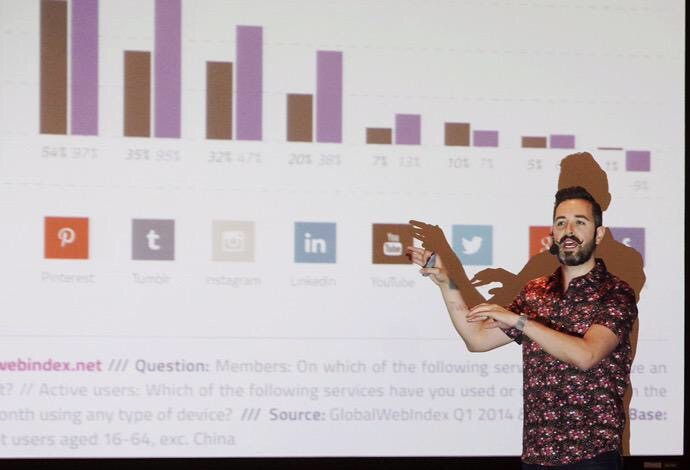
DigiMarCon Keynotes, Panels and Master Classes are facilitated by the foremost thought leaders in the industry, from celebrity social media influencers to CMO’s from the largest Fortune 500 company brands that are disrupting the digital marketing, media and advertising industry, such as Google, Facebook, Microsoft, Amazon, Oracle, Adobe, eBay, Netflix and more. All presentations are pitch-free, and include actionable takeaways, case studies, strategies and tactics, ready to be applied when back in the office.
Premium Comfortable Meeting Spaces

At DigiMarCon Conferences you are never ‘left in the dark’…. literally, in a large room far away from the stage and speakers, crushed in tight theater seating, without even a table, while sitting in the dark. At DigiMarCon all delegates have premium meeting space in luxurious ballroom well-lit spaces, with comfortable seating with table enabling delegates to use their laptop to take notes with ample charging facilities onsite in a comfortable space to learn and thrive. All tables are situated close with direct view of the stage.
Value for Money & Generous Discounts

DigiMarCon Conferences are affordable to attend, from single-day event passes up to two-day VIP options at a fraction of the cost of other industry events. We offer significant discounts for early bird registrations. Additionally, on top of time-limited discount pass rates, because budgets are tight, we want to make sure all groups have a chance to attend DigiMarCon. For government employees, students, academic, startups, non-profit organizations and teams, we offer generous discounts off the prevailing registration price.
Collaborative Learning & Audience Participation
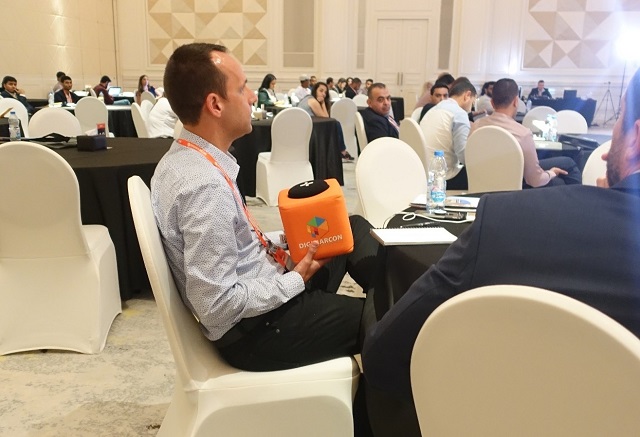
Attend DigiMarCon and you become part of the show! DigiMarCon Conferences tap into the talent of the room, drawing from the knowledge and experience of the professionals in the audience. All DigiMarCon events include regular interactive question and answer sessions with speakers and the audience ideal for collaboration, audience polls, along with ice-breaker and group exercises, steered by charismatic Emcees.
Meet the Speakers in Person

DigiMarCon Conferences put you right up and close with the speakers giving you the opportunity to meet these social media influencers which you follow in person. Speakers are never hidden in private speaker rooms away from the audience, they are in the auditorium sitting right beside you and participating.
Exceptional Customer Service

Attending a conference is a well-researched decision. There are many factors to consider such as location, time, venue, cost, speakers, content, etc. At DigiMarCon our results-obsessed Customer Service team are at your service before, during and after the event to help with your needs. It’s at the core of what we do — it drives our business. Offsite, we are ready to assist you via phone, ticket or chat. Onsite at our Conferences, friendly DigiMarCon staff serve as your hosts. They welcome your input and are happy to assist you.
TECHSPO Technology Expo

At all DigiMarCon Conferences is the co-located exclusive event TECHSPO Technology Expo, which showcases the new generation of technology and innovation, including; AdTech, MarTech, Internet, Mobile and SaaS technologies. Be inspired, amazed and educated on how these evolving technologies will impact your business for the better. Unlimited Access to TECHSPO Technology Expo is included with all DigiMarCon passes.
On Demand Library Access

DigiMarCon All Access & VIP Passes include a 12-month on demand access to hundreds of hours of DigiMarCon speaker keynotes, panels and master class presentations from recent DigiMarCon Conferences, including videos, slide decks and key takeaways, available on demand so you can watch what you want, when you want.
The Largest Digital Marketing, Media & Advertising Community

Attendees of DigiMarcon Conferences gain membership to an exclusive global Digital Marketing, Media and Advertising Community of over 500,000 worldwide subscribers to our award-winning digital marketing blog and over 100,000 members to the International Association of Digital Marketing Professionals (visit https://iadmp.org). This global community comprises of innovators, senior marketers and branders, entrepreneurs, digital executives and professionals, web & mobile strategists, designers and web project managers, business leaders, business developers, agency executives and their teams and anyone else who operates in the digital community who leverage digital, mobile, and social media marketing. We provide updates to the latest whitepapers and industry reports to keep you updated on trends, innovation and best practice digital marketing.
Safe, Clean & Hygienic Event Environment

The events industry has forever changed in a world affected by COVID-19. The health and safety of our guests, staff and community is our highest priority and paramount. The team at DigiMarCon is dedicated to ensuring a great experience at our in-person events, and that includes providing a safe, clean and hygienic environment for our delegates. Some of the key areas we have implemented safe and hygienic measures include;
- Limiting Venue Capacities to allow for Social Distancing
- Health and Safety Protocols
- Safe Food and Beverages and Food-handling
- Sanitation Stations with Hand Sanitizer and Wet Wipes Dispensers
- Sanitation and Disinfection of Common and High-Traffic Areas
- Physical Distancing Measures Between Attendees
- Social Distancing Room and Seating Configurations
- Non-Contact Thermal Temperature Scanning
Hybrid Events: Attend In-Person or Online

DigiMarCon has always been industry leaders of the Hybrid Event experience for years (a hybrid event combines a "live" in-person event with a "virtual" online component), no one needs to miss out on attending our events. Each DigiMarCon Conference can be attended in-person (with a Main Conference, All Access or VIP Pass) or online (with a Virtual Pass) giving attendees a choice for the experience they want to have. Attending virtually by viewing a Live Stream or On Demand enables participation by people who might be unable to attend physically due to travel or time zone constraints or through a wish to reduce the carbon footprint of the event. If you would like to meet the speakers, network with fellow marketing professionals at refreshment breaks, luncheons and evening receptions, check out the latest Internet, Mobile, AdTech, MarTech and SaaS technologies providers exhibiting then it is highly recommended to attend DigiMarCon in-person. As the largest Digital Marketing, Media and Advertising Conference series with events in 33 international cities worldwide, across 13 countries, there is bound to be a DigiMarCon Event near you to attend in-person if you can.
High-Profile Audience From Leading Brands

DigiMarCon Conference Series is the annual gathering of the most powerful brands and senior agency executives in your region. The Sharpest Minds And The Most Influential Decision Makers - Together for Two Days.
Who Attends Our Conferences
Brands • Agencies • Solution & Service Providers • Media Owners • Publishers • Entrepreneurs • Start-Ups • Investors • Government • Corporates • Institutes of Higher Learning


